
AI Is Not the Future. It Is the Present: What Women in the Workforce Must Understand Now
The Shift Is Already Happening
For years, we talked about artificial intelligence (AI) as if it were something on the horizon. It was framed as innovation that would eventually reshape industries, redefine roles, and influence how we work. That time has passed. AI is no longer approaching. It is already embedded in how decisions are made, how performance is measured, and how opportunities are distributed.
What concerns me is not that AI is advancing. Progress is expected. What concerns me is who is positioned to benefit from that progress and who is at risk of being left behind. Women have made meaningful strides in leadership, influence, and economic power over the last several decades. However, without intentional strategy, AI has the potential to quietly widen the very gaps women have worked so hard to close.
This moment requires more than awareness. It requires action, ownership, and strategic positioning. If you are not actively thinking about how AI is shaping your role, your visibility, and your value, then you are already reacting instead of leading. The goal is not to fear AI. The goal is to understand it, leverage it, and position yourself ahead of it.
AI Is Reshaping Work at Every Level
AI is not simply automating repetitive tasks. It is fundamentally redefining how work is structured, evaluated, and rewarded. Roles are being redesigned around efficiency, speed, and data-driven insights. This means the value of work is shifting from execution to strategy.
For many women, especially those who have built careers on reliability and consistency, this shift can feel disruptive. Historically, being dependable and detail-oriented created stability and advancement. Today, those traits must be paired with adaptability, digital fluency, and strategic thinking. The workplace is no longer rewarding effort alone. It is rewarding impact, innovation, and influence.
At the entry level, many tasks are being automated or augmented by AI tools. This creates both risk and opportunity. At the mid-level, managers are being asked to implement AI-driven processes without always having a seat at the decision-making table. At the senior level, leaders are expected to guide transformation, even when they themselves are still learning the landscape. At the executive level, decisions about AI adoption will shape the future of entire organizations and workforces. This is not just a technology shift. It is a power shift.
The AI Gap and Why Women Must Pay Attention
AI is often perceived as neutral. In reality, it reflects the data, systems, and biases that already exist. If those systems are not intentionally designed for inclusion, they can reinforce inequities in hiring, promotion, performance evaluation, and compensation.
Women are already underrepresented in many of the roles that are shaping AI. This includes technical development, data science, and executive decision-making positions. When women are not present in these spaces, their perspectives are not embedded in the systems being built. This creates a cycle where AI can unintentionally prioritize certain voices while minimizing others.
The AI gap is not only about access to tools. It is about access to influence. It is about who is seen as a strategic thinker versus who is seen as a task executor. Women must shift from being users of AI to being architects of how AI is applied within their organizations.
Applying the POWER Career Blueprint: Purpose and Ownership
This is where your POWER Career Blueprint™ becomes essential.
Purpose
Purpose is about clarity. You must define how you want to show up in an AI-driven workforce. Are you positioning yourself as someone who simply completes assigned tasks, or are you positioning yourself as someone who drives outcomes and influences decisions?
When you are clear on your purpose, you stop reacting to change and start leading through it. You begin to ask different questions. You focus on where your skills intersect with future needs rather than where they have been historically valued.
Ownership
Ownership requires action. No one is going to hand you the roadmap for AI readiness. You must take responsibility for your learning, your exposure, and your positioning.
Ownership looks like:
Actively learning how AI tools apply to your role.
Seeking opportunities to be involved in AI-related projects.
Speaking up about how AI can improve processes and outcomes.
Ownership also means advocating for yourself. You cannot afford to stay silent while transformation is happening around you.
Applying the F.U.T.U.R.E. Workforce Strategy: Forecast and Transition
Your F.U.T.U.R.E. Workforce Strategy™ provides the organizational lens needed to understand where work is going.
Forecast the Workforce of Tomorrow
Organizations are already identifying which roles will evolve, which will be eliminated, and which will be created. The question is whether you are aligning yourself with those future opportunities.
Pay attention to trends in your industry. Look at which skills are being prioritized. Identify where AI is being integrated into workflows. This is how you stay ahead instead of trying to catch up.
Transition from Roles to Skills
The traditional career model focused on job titles. The future of work is focused on skills. This is a critical shift, especially for women who may have been defined by roles rather than capabilities.
Ask yourself:
What skills do I bring that cannot easily be automated?
How can I enhance those skills using AI?
What new skills do I need to remain competitive?
Your ability to translate your experience into transferable, future-ready skills will determine your trajectory.
Generational Differences: Who Is at Risk and Who Is Positioned to Lead
Each generation is experiencing AI differently, and understanding these dynamics is essential.
Gen Z is entering the workforce with strong digital familiarity. However, many lack strategic positioning and may rely too heavily on tools without understanding their impact.
Millennials are well-positioned to lead AI adoption. They bring both experience and adaptability, but many are navigating burnout and competing priorities.
Gen X brings deep expertise and institutional knowledge. However, there is a risk of being overlooked if they do not actively demonstrate digital relevance.
Baby Boomers offer leadership, mentorship, and strategic perspective. Their challenge is ensuring their contributions remain visible in a technology-driven environment.
The opportunity lies in collaboration. Organizations that leverage the strengths of each generation will outperform those that allow gaps to widen.
Practical Tips to Position Yourself Now
You do not need to become a technical expert to be AI-ready. You need to become strategically aware and intentionally engaged.
Here are practical ways to start:
Learn one AI tool that directly impacts your role and apply it consistently.
Volunteer for projects that involve process improvement or digital transformation.
Ask questions about how AI is being used in your organization.
Position your work in terms of outcomes and impact, not just tasks completed.
Build relationships with individuals who are leading AI initiatives.
Small, consistent actions will create significant momentum over time.
Weekly Call to Action
Reflection Prompts
How is AI currently impacting my role, even if I have not acknowledged it yet?
Am I positioning myself as a strategic contributor or a task executor?
Where have I been passive in my career that now requires active engagement?
Career Audit Questions
What percentage of my daily tasks could be automated within the next two years?
What skills do I have that are uniquely human and difficult to replicate?
Am I visible in conversations about innovation and transformation within my organization?
AI Skill-Building Challenges
Identify and test one AI tool that enhances your productivity this week.
Spend thirty minutes researching how AI is being used in your industry.
Initiate one conversation with a colleague or leader about AI and its impact on your team.
This Is Your Defining Moment
This is not just another shift in the workplace. This is a defining moment that will determine who leads, who adapts, and who gets left behind. Artificial intelligence is accelerating change at a pace we have never seen before. However, speed alone does not determine outcomes. Strategy does.
Women have always demonstrated resilience, adaptability, and innovation. Those strengths are needed now more than ever. The difference in this moment is that awareness is not enough. You must be intentional about how you position yourself, how you develop your skills, and how you show up in conversations that shape the future.
You are not here to be replaced. You are here to evolve. You are here to lead. You are here to ensure that the future of work includes your voice, your value, and your vision. The question is not whether AI will change the workplace. It already has. The question is whether you will rise with it or be reshaped by it.
If you want to learn more about preventing the expansion on inequities in the workplace, check at my new book:
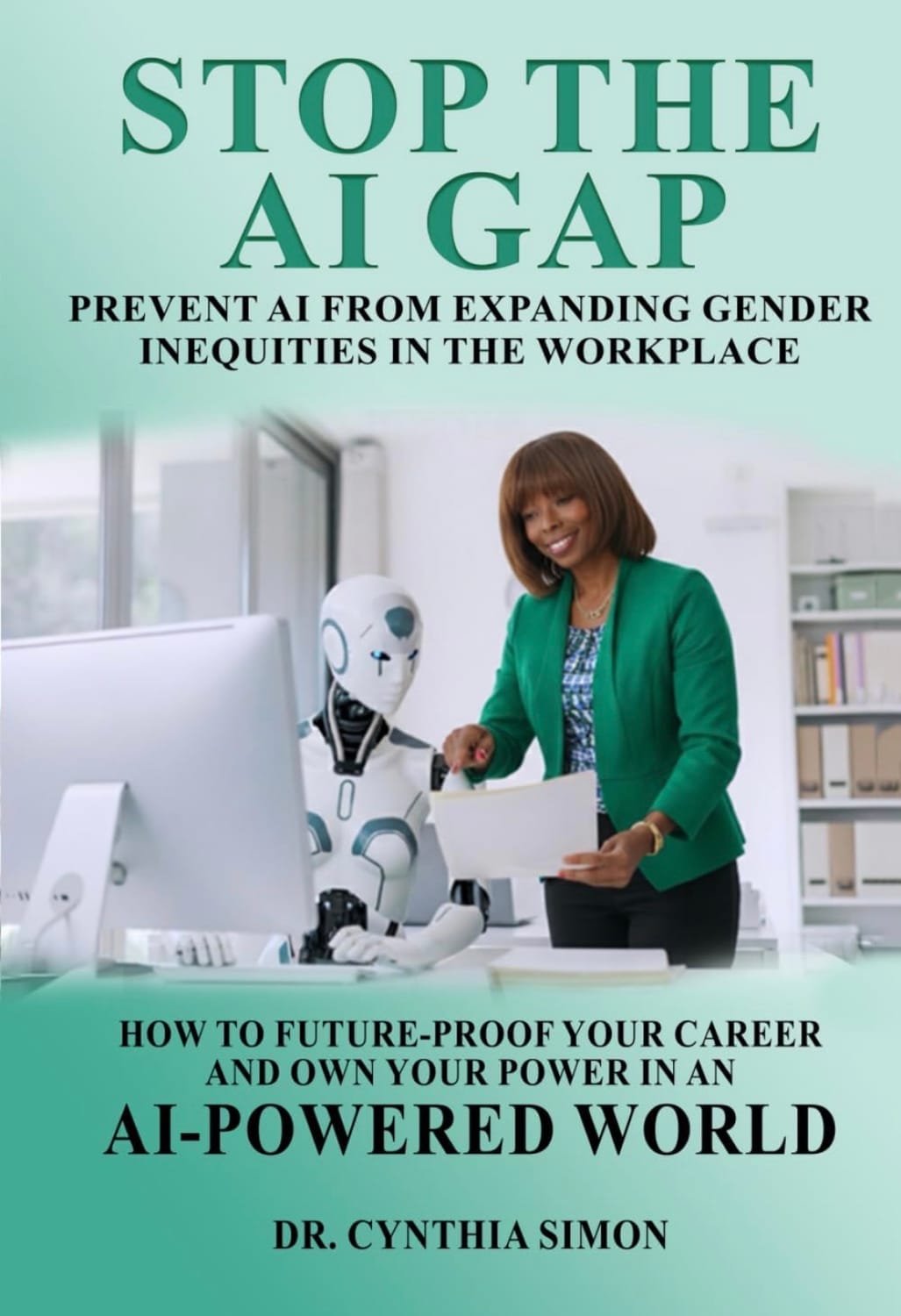
It’s available on Amazon and all other major platforms.
At Level Up Empowerment Coaching we help ambitious women protect their power and lead with bold clarity. Need help figuring out your AI strategy for today and the future? It’s time to Book a Strategy Session to help you formulate your strategy
#AIInTheWorkplace #WomenInLeadership #FutureOfWork #CareerGrowth #AITransformation #LevelUp #OwnYourCareer #WomenInBusiness #LeadershipDevelopment #FutureReady

ARE YOU READY TO TAKE CONTROL OF YOUR CAREER?
Invest in Yourself
emPOWER Your Path:
Become the CEO of Your Career
The Time is NOW!


GET UPDATES
If you're looking for an experienced emPowerment Coach who can help you achieve your professional goals and become the CEO of your career,
it's time to LEVEL UP.
Quick Links
Newsletter
Subscribe now to get yout free copy!
Created by Get The Tech Out Of Here with Systeme.io